Default boundary
The README states voice, audio, and transcribed text stay on the machine unless a cloud AI provider is explicitly enabled.
local first dictation app
Use the planner to translate FluidVoice source facts into a concrete setup, privacy, model, and workflow decision.
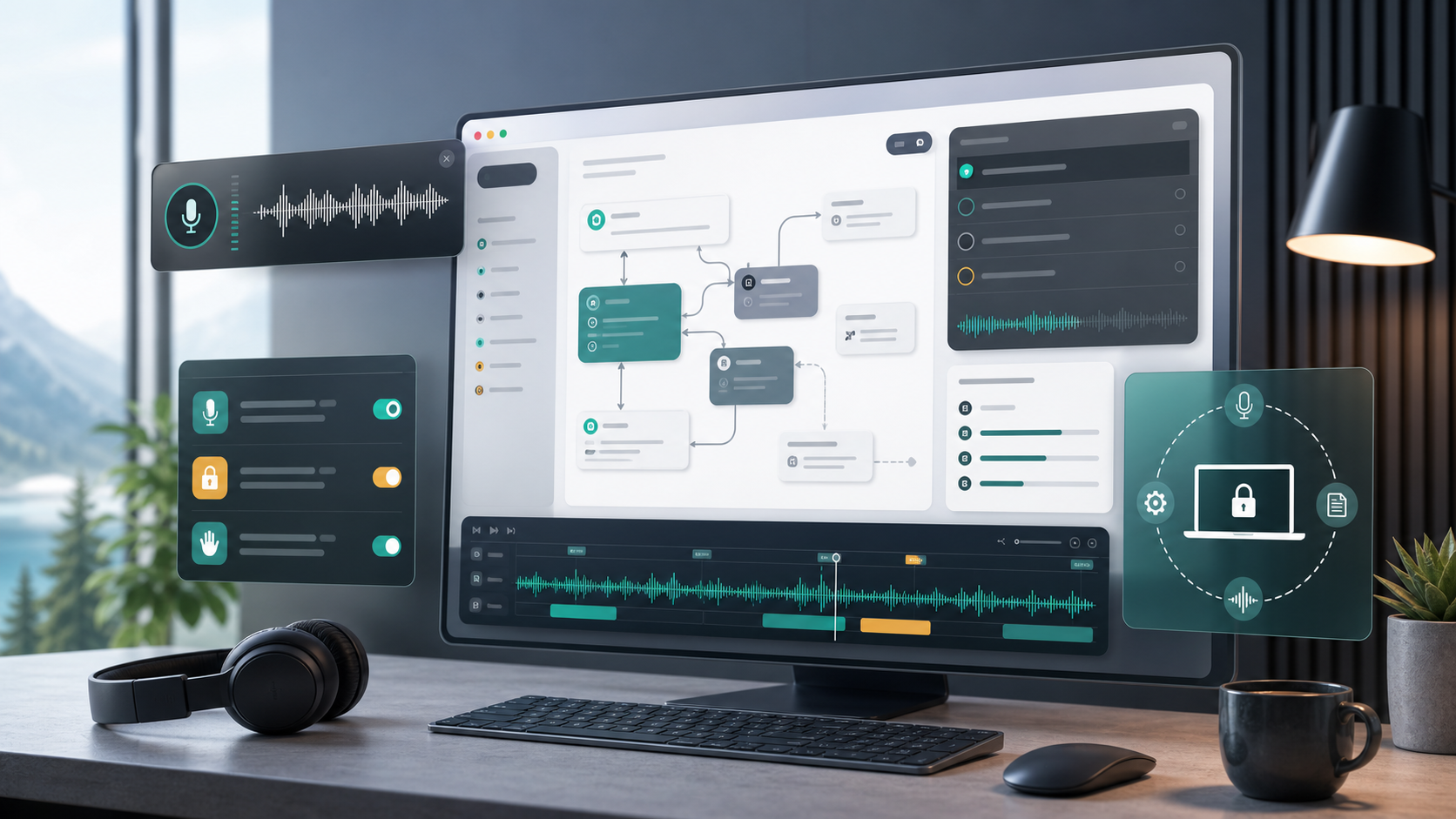
Workflow
The README states voice, audio, and transcribed text stay on the machine unless a cloud AI provider is explicitly enabled.
AI enhancement, Fluid Intelligence, audio history, anonymous analytics, and beta builds are choices that should be documented.
Decide who can enable providers, whether history is saved, how audio budgets work, and when exports are allowed.
Decision matrix
| Area | Question | Planner output |
|---|---|---|
| Voice engine | Does the work need zero-download setup, low latency, multilingual support, Intel compatibility, or high accuracy? | Model recommendation with setup notes and disk expectations. |
| Permissions | Can users explain microphone, accessibility, Apple Events, and speech recognition access before approving prompts? | Onboarding checklist and risk labels. |
| Mode policy | Where should Command Mode, Write Mode, per-app prompts, and direct insertion be allowed? | Mode map with safe, review, and blocked zones. |
| Privacy | Which opt-ins are allowed: cloud enhancement, Fluid Intelligence, analytics, beta builds, local history, and exports? | Privacy boundary and data-retention notes. |